
Dogdyke is a land drainage pumping station. The steam engine was built in 1856 to replace an existing wind driven pump to drain a large area of farmland between the rivers Bain and Witham.
The engine, which runs in steam on all Open Days, is the original, external condensing beam-engine built by Bradley and Craven of Wakefield. It is the only surviving engine by this builder and is possibly the oldest steam-driven scoop wheel land drainage pumping set in the country that is still in steam and in its original position.
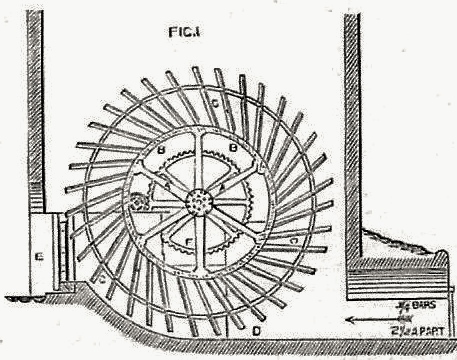
This is a 16-horse power steam engine driving a 24 foot (7.3m) diameter scoop wheel with wooden floats that can lift 25 tons (22.7tonnes) of water. It once lifted water from the lower drain into the River Witham, but now the water is channelled back into the drain.

The Diesel Pumping Engine
In 1940 a new building was erected next to the steam pump. This houses a 40 horse-power Ruston & Hornsby 7XHR single cylinder diesel engine that runs at 300 rpm and drives a 22inch (56cm) diameter centrifugal pump made by Gwynnes.
It can pump 40 tons (36tonnes) of water per minute. A 5 horse-power Ruston & Hornsby 1VTO engine operates a compressor which fills a reservoir cylinder to 200psi, used to start the main engine. All this machinery was made in Lincoln.
This pump was replaced by electric pumps on a different site in 1979 but it is still used by the Witham 3rd Internal Drainage Board as a stand-by pumping set for use in an emergency.
The engines operate each open day on the times shown.
In the Pump Attendant’s Cottage there is a small museum and also a refreshment room for teas and home-made cakes.
The entrance and car parking are free but we welcome donations to help towards the running costs of the engines and site.

We are in the process of uploading documents from the early days of the Trust, from formation in November 1973 to the early 80s, you can find these documents here – Old Newsletters
There are also some historical notes and information which had been compiled by the Trust, most notably Ray Hooley who wrote the first Technical Brochure in 1982 – this is also available in the Old Newsletters section.
